

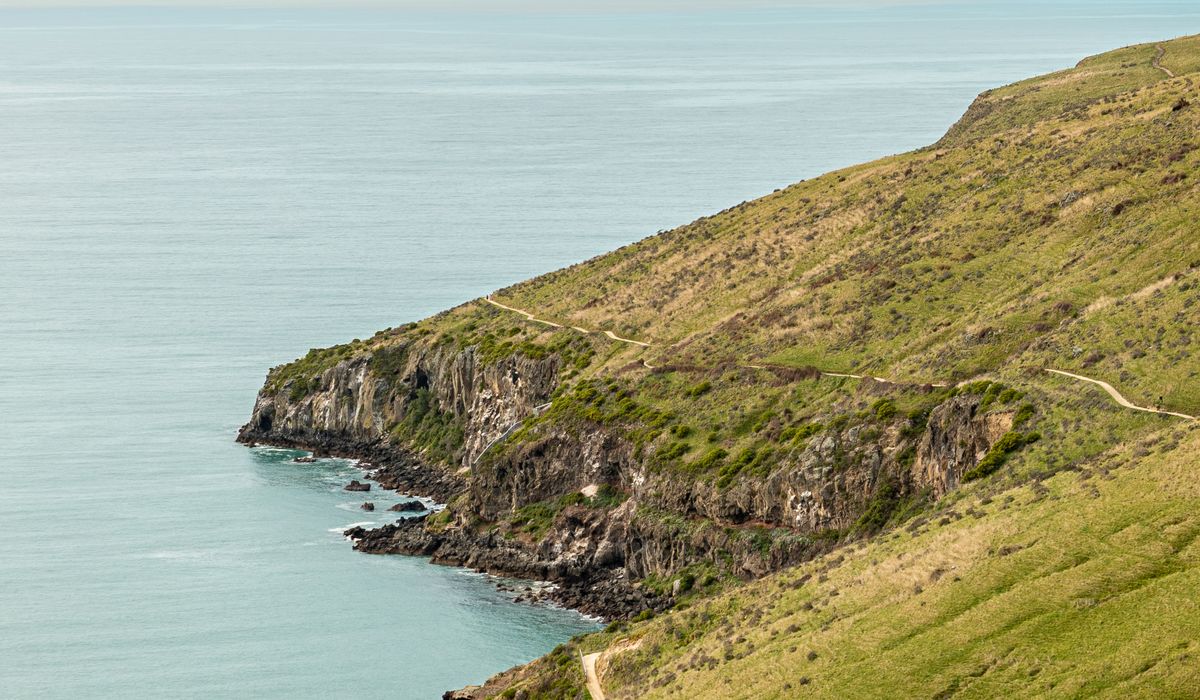
When the cloud comes down
There is a particular moment on a British hill when the world shrinks. You have been walking a broad ridge with the view opening out for an hour, and then a soft grey wall drifts towards you. Within ten minutes the summit cairn is thirty metres away and the fence line you were steering for has simply vanished. It rarely feels dramatic. Hill fog is just cloud sitting on the ground, and it can arrive on a still, mild afternoon as easily as in a winter gale.
What catches people out is not the fog itself but the sudden loss of information. Landmarks go, the horizon goes, and the reassuring sense of "I know roughly where I am" goes with them. The trick is to remember that fog removes the view, not the facts. Your map, your compass, your pacing and your timing all still work perfectly. The walk simply becomes a series of small, definite problems rather than one big, vague one.
Prepare the route before you lose the view
Most fog navigation errors begin an hour earlier, in clear weather. Use the visibility while you have it:
- Mark your last certain position. Not where you think you are — the last feature you physically touched, such as a stream junction, a wall corner or a cairn.
- Identify handrails. A handrail is any linear feature you can follow: a fence, a wall, a stream, a ridge line or an obvious edge. Fog is much easier to manage when you have something to lean on.
- Plan escape routes. Note a valley, track or road you could drop to if the day goes wrong, and roughly which direction it lies.
- Write down bearings and timings. Work out the bearing for the next leg and the distance in metres, then note what time you should arrive. A small card in a map case saves fumbling.
- Agree a turnaround time with your group and stick to it. Say it out loud so everyone has heard it.
Walking a bearing without drifting
To take a bearing, lay the compass on the map with its edge running from your position to the target. Turn the housing until the orienting lines sit parallel with the grid lines, pointing to the top of the map — that is grid north. Now hold the compass flat in front of you and turn your whole body until the red needle settles inside the orienting arrow. The direction of travel arrow now points where you want to go.
In Britain the difference between grid north and magnetic north is small, usually under about five degrees, and the exact figure for the year is printed in the map margin. Check it rather than guessing, but for short legs it rarely changes the outcome.
Walking on a bearing is where most people drift. A few practical habits help:
- Pick an intermediate target in the direction of travel — a boulder, a tussock, a patch of darker grass — walk to it, then repeat. This stops you staring at the compass and tripping over everything.
- Look up every twenty paces to check the ground and the shape of the hill.
- Aim off deliberately. If you are heading for a col with a stream running from it, aim a hundred metres to one side. When you meet the stream you know exactly which way to turn, rather than wondering whether you have overshot.
- Use back bearings. To check you have not drifted, take a bearing back to a feature behind you and see whether it matches what it should be.
Pacing and timing: your two clocks
Pacing gives you distance, and distance tells you where you are along a bearing. Count double paces — every time your left foot lands, say. Most adults take roughly sixty to eighty double paces per hundred metres on level ground; uphill it takes more, downhill on rough grass it takes fewer, and a bog will wreck the estimate entirely.
Measure your own pace count on a known stretch of ground, then count in blocks of a hundred. Someone in the group should be responsible for counting, and it helps if they are not also leading the conversation. It is far too easy to reach four hundred and then lose the thread entirely.
Timing is the second clock. A reasonable working rule for hill walking with a pack is four kilometres per hour on the flat, plus one minute for every ten metres of ascent, and add extra for bog, boulder fields and a large group. Keep both figures running. If your pacing and your timing disagree, stop, sit down, and work out why before you carry on.
Staying away from steep ground
Fog turns a grassy slope into a trap, because the ground tells you nothing until it is too late. Contour lines on the map are your best guide: closely packed lines mean steep ground, widely spaced lines mean gentle ground, and the shape of the contours tells you which way the land falls. Look for crag symbols and steep hachures, and treat them as hard boundaries.
If you need to move around a steep feature, set a bearing that runs parallel to it rather than across it, and keep checking the ground on the uphill side. If the slope under your feet feels steeper than the map suggests, stop and re-check your position. Never assume a downhill direction in fog — walking downhill to "get off the hill" is how people end up on the wrong side of a crag or above a cornice.
Making the call in poor visibility
Cold, fatigue and hunger all make navigation harder, and fog magnifies every small mistake. Stop properly for food and a hot drink, put on an extra layer, and get the headtorch out before you need it rather than after. Then ask the honest question: can we still account for every leg of this route, with a bearing, a distance and a clear arrival point?
If the answer is no, turn around. The hill will still be there next weekend, and the walk back along your own footprints in the fog is a thoroughly respectable way to spend an afternoon. Fog lifts, weather clears, and a group that navigated its way down carefully in the mist has had a genuinely good day out. The compass in your hand has not stopped working for a moment — and neither have you.


John Doe
14 January, 2022Having no content in post should have adverse..
Chauffina Carr
10 April, 2022We use these tests all time! Killer stuff!
Jim Séchen
16 July, 2022Thanks for all the comments, everyone!