


Why British weather demands more from your boots
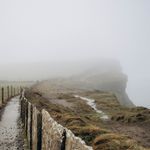
British hill and coastal paths are rarely dry. From peat bogs in the Peak District to slippery granite on the Cornish coast, you will meet mud, standing water, wet grass, and sudden showers. A boot that works on a dry trail in summer may fail you in November. The right pair balances grip, ankle support, breathability, and waterproofing. Get it wrong, and you will slip, twist an ankle, or spend the day in damp socks.
Grip: the difference between a confident step and a slip
Grip is your first line of defence. Look for a deep, multi-directional lug pattern. For British conditions, lugs of 4–6mm work well. They bite into mud and loose gravel but do not clog too quickly. Coastal paths often mean wet rock and seaweed-covered slabs; a sticky rubber compound helps here. Softer rubber grips better on wet rock but wears faster on abrasive gritstone. Stiffer rubber lasts longer but can feel skaty on wet granite.
- Mud and grass: deep, spaced lugs that shed muck.
- Wet rock and coastal slabs: softer rubber and a slightly rounded sole edge for smearing.
- Rocky descents: a defined heel brake stops you sliding.
Do not assume all aggressive-looking soles are equal. The pattern and compound matter more than the label. If you walk mostly on soft ground, prioritise self-cleaning lugs. On rocky coastal paths, choose a sole that sticks.
Ankle support: for rocky descents and uneven coastal paths
Ankle support is not about stiffness alone. It is about how the boot holds your heel and guides your ankle. A boot that is too stiff feels clunky on easy paths; too soft and you will feel every stone. For British hill walking, a mid-height boot with a supportive heel cup and a flex point at the ball of the foot works well. Coastal paths often have eroded steps and boulder fields, so lateral stability matters.
Try this in the shop: lace them up and stand on a ramp or a tilted surface. Your heel should stay locked. If it lifts, you will get blisters on long days. The boot should flex where your foot flexes, not in the middle of the arch.
- Leather boots: offer gradual support that moulds to your foot over time.
- Synthetic boots: lighter and often more immediately comfortable, but can break down faster.
- Mid vs high: mid boots suit most UK trails; high boots add support for heavy packs or very rough ground.
Breathability: keeping feet dry from the inside out
Waterproof boots trap sweat. On a long climb, your feet produce a lot of moisture. If that moisture cannot escape, your socks get damp, your feet get cold, and blisters form. Breathability is not a luxury; it is a safety feature. Look for a waterproof and breathable membrane. But remember: no membrane breathes as well as an unlined leather boot. There is always a trade-off.
For British weather, a lined leather or synthetic boot with a membrane is a good compromise. If you walk fast and sweat heavily, consider a boot with minimal cushioning and good ventilation. If you walk slowly in cold, wet conditions, prioritise waterproofing over maximum breathability.
- Lined boots: warmer and more waterproof, but slower to dry if water gets in.
- Unlined leather: breathes well and can be treated to be water-resistant, but not fully waterproof in prolonged rain.
- Synthetic mesh panels: improve breathability but reduce durability and water resistance.
Waterproofing: membranes, leather and the limits of 'waterproof'
No boot is fully waterproof forever. Water gets in over the top, through the tongue, or when the membrane fails. That said, a good waterproof boot keeps you dry through wet grass, puddles, and moderate rain. Look for a boot with a gusseted tongue (attached to the sides) and a high collar. Sealed seams help. Leather boots need regular waxing or conditioning; synthetic boots need a treatment spray to maintain their water repellency.
Test waterproofing before you rely on it. Stand in a stream or a deep puddle for a minute. If water seeps in at the seams, return them. On the trail, avoid stepping in deep bogs where water can overtop the boot. Even the best boot will fill if you stand in water above the collar.
Getting the fit right: the foundation of every good walk
All the features in the world will not help if the boot does not fit. British trails mean long days, so fit matters. Go to a shop with a trained fitter. Wear the socks you will walk in. Your toes should touch the front when you stand, but not press when you lace up. Your heel should be locked. The boot should feel snug but not tight across the instep.
Try boots on in the afternoon when your feet are slightly swollen. Walk around the shop, up and down any ramps. If you can, buy from a shop that lets you return worn boots after a test walk indoors. A good fit reduces slips, prevents blisters, and keeps you comfortable on long coastal paths.
Finally, break them in gradually. Short walks first, then longer. Clean and reproof them after muddy walks. With care, a well-chosen pair will serve you for many seasons of British weather.




John Doe
14 January, 2022Having no content in post should have adverse..
Chauffina Carr
10 April, 2022We use these tests all time! Killer stuff!
Jim Séchen
16 July, 2022Thanks for all the comments, everyone!