

Start with the pack itself
Everything else in this article hangs off one decision: what you carry it in. A 20 to 30 litre day pack is the sweet spot for a UK hill day. Smaller than that and you will be strapping waterproofs to the outside like a badly wrapped parcel; much bigger and you will fill it with things you never use, which you will feel on every steep pull up a Lakeland scree slope. Look for a pack with a decent hip belt, even a simple webbing one. On a long climb, transferring a couple of kilos from your shoulders to your hips makes the difference between arriving at the summit grinning and arriving at the summit swearing.
Before you leave the house, put the pack on and check it sits close to your back, with the weight high and near your spine. A pack that sags backwards will tug at your shoulders all day. Lighter is better, but light does not mean unprepared. The trick is carrying the right things in the smallest sensible form.
Layers and waterproofs, even in July
British hills do not respect the forecast. A still, warm valley can turn into a wind-scoured ridge at ten degrees colder within an hour of walking, and a shower that looks harmless from the car park can settle in for the afternoon. Treat waterproofs as essential, not optional, whatever the weather app says.
- Waterproof jacket with a hood that stays up in wind and taped seams. Keep it at the top of your pack, not buried.
- Waterproof trousers. The ones you can pull on over boots in under a minute are the ones you will actually wear.
- Insulating mid-layer — a fleece or light synthetic jacket. Down is lovely until it gets damp.
- Spare warm layer and a hat and gloves. A thin beanie and liner gloves weigh almost nothing and save a lot of misery on a breezy summit.
- Spare socks in a dry bag. Wet feet on a descent are how blisters start.
Water, food and the energy to keep going
On a full day out you will be moving for five to eight hours, and you will sweat more than you expect, especially on steep ground. Carry at least one to one and a half litres for a half-day and up to two or three litres for a long summer route, more in heat or on exposed coastal clifftops where there is little shade. A flask of something hot earns its place from October to April.
Food should be easy to eat with cold hands and one-handed while walking. Forget anything that needs a knife and fork or a lot of chewing.
- Sandwiches, oatcakes, pork pie, or a flask of soup for a proper sit-down lunch.
- Nuts, malt loaf, flapjack, dried fruit, and a few boiled sweets for a quick lift on a climb.
- An emergency extra — a cereal bar or two you do not touch unless plans change.
Navigation: paper beats a flat battery
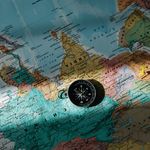
Phone apps are brilliant, and many walkers use them happily. But a phone in a wet pocket on a cold day can die exactly when you need it. On any hill day, carry a paper map of the area you are walking, a compass, and the knowledge to use both. A laminated 1:25,000 or 1:50,000 map and a simple baseplate compass weigh very little.
Before you set off, spend five minutes looking at the route: where the path leaves the road, which way the ground drains, what a wrong turn looks like. Note a couple of handrails — a stream, a wall, a forest edge — that will catch you if visibility drops. In cloud, a compass bearing and a steady pace count will get you off a plateau far more reliably than squinting at a screen. Tell someone where you are going and when you expect to be back, and stick roughly to it or let them know if plans change.
A small first aid kit and the odds and ends
You do not need a field hospital. You need to deal with blisters, cuts, a twisted ankle, and a headache. A small pouch in a dry bag covers it.
- Plasters, blister plasters, and a roll of zinc oxide tape.
- Antiseptic wipes, a small dressing, and a few painkillers.
- A triangular bandage or support bandage, and any personal medication.
- A foil emergency blanket, a whistle, and a head torch with spare batteries.
Round it off with the practical bits: a charged phone in a waterproof case, a bit of cash, a small bin bag to sit on or pack rubbish out, and sun cream and a cap for coastal paths where the glare off the sea catches people out. A walking pole or two, if you use them, will save your knees on long descents.
Keeping it light on the climb
The best kit is the kit you forget you are carrying. Weigh your loaded pack before you go; for a summer day out, around five to seven kilos including water and food is a sensible target. Repack after every trip and be honest about what you never touched. Those unused items quietly add up to the reason the last climb felt harder than it should have.
Start with the essentials above, adjust to the season, and check the mountain weather forecast and any local access notices the evening before. The hills reward a little preparation with a very good day out.


John Doe
14 January, 2022Having no content in post should have adverse..
Chauffina Carr
10 April, 2022We use these tests all time! Killer stuff!
Jim Séchen
16 July, 2022Thanks for all the comments, everyone!