

Why coastal walking asks something different of your rucksack
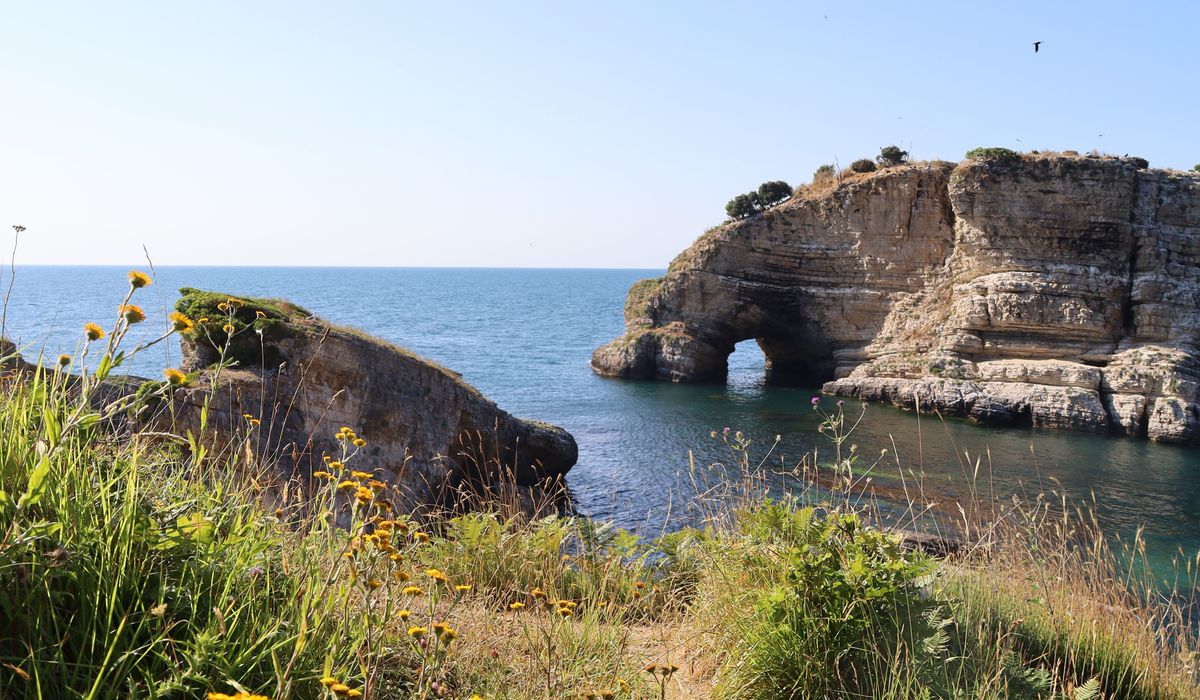
A cliff path is rarely level. You might climb a hundred metres of steps out of a Cornish cove, drop to a shingle beach, then spend an hour on springy turf with the wind pushing at your shoulder. Add salt spray, sea fret, a sudden sun shower and the fact that you are never far from a view worth stopping for, and you get a day where your load shifts constantly.
That is why coastal walking rewards a light rucksack more than almost any other kind of walking. Every extra kilogram is a kilogram you lift on every step of every climb, and the coast path is relentless with its ups and downs. Get the packing right and you will notice your legs, the seabirds and the smell of the gorse rather than a nagging ache between your shoulder blades.
Fit first, load second
Before you think about what goes in, check that the rucksack actually suits your back. A comfortable pack spreads the load across your hips and shoulders. The hipbelt should carry the bulk of the weight, sitting on the top of your hip bones rather than riding up around your waist. The shoulder straps are there mostly to hold the pack against your back, not to hang it from your collarbones.
Do this at home:
- Load the pack to roughly the weight you will carry on the day, then wear it for twenty minutes around the house and up and down the stairs.
- Loosen everything, put the pack on, and fasten the hipbelt first. Cinch it snug so the padding wraps your hips.
- Tighten the shoulder straps until they sit flat, with no gap above your shoulders.
- Pull the load-lifter straps (the small ones at the top of the shoulder straps) until the pack hugs your back.
- Adjust the sternum strap so it sits across your chest without restricting your breathing.
If the pack pulls backwards when you lean forward, the load is too far from your spine. If the hipbelt digs in, it is too high or too tight. Sort this out at home, because fiddling with buckles on a windy headland is miserable.
What actually earns a place in the bag
Aim for a base weight of around four to six kilograms for a full day. That sounds generous, and it is. Here is a sensible starting list for a British coastal walk in spring or autumn:
- Waterproof jacket and trousers — even on a blue-sky forecast, sea air changes its mind. Choose something that packs to the size of a grapefruit.
- A warm mid-layer — a light fleece or a synthetic insulated jacket. Wind off the sea is cold even in June.
- Sun hat and sunglasses — coastal light bounces off water and pale rock. You will burn more easily than inland.
- Water, one to one and a half litres — more in summer. Refill points on the coast path are rare, so plan around a pub or a village tap.
- Food — a flask, a sandwich, a couple of flapjacks. Eat little and often on the climbs.
- Map, compass and a charged phone — the coast path is waymarked but not always obvious, especially where erosion has diverted the route.
- Small first-aid kit — plasters, blister plasters, a few painkillers, some tape. Add tweezers for ticks if you are walking through rough grass.
- Headtorch — tiny, and worth its weight if a path takes longer than expected.
- Sun cream and lip balm — the wind hides the burn until the evening.
Anything you have not used on three consecutive walks probably does not need to come. Leave the spare trousers, the second book and the folding chair at home.
Pack it so the weight sits where you want it
Heavy items belong close to your spine and high in the pack, just below the top of your shoulders. That keeps the mass over your hips rather than dragging you backwards. Light, bulky things like a spare layer go at the bottom. Things you will reach for often — water, snacks, sun cream, map — go in the side pockets, the lid or the hipbelt pockets.
A few coastal specifics:
- Keep waterproofs at the top or in an outside pocket. You will stop to put them on far more often than you expect.
- Use a dry bag or a sturdy plastic bag inside the pack for anything that must stay dry. Sea spray and drizzle find their way into every seam.
- Do not strap anything loose to the outside. Wind will snatch a dangling hat or a swinging mug.
- Put the map in a clear case on top, or better still, use a wrist case so you are not stopping every stile.
Adjusting as the day warms up
The coast path makes you change layers constantly. You climb in the sun, then turn a headland into a cold breeze, then drop into a sheltered valley where the air is suddenly still and humid. Each time you take off a fleece or put on a jacket, the pack changes shape and the fit changes with it.
So when you stop:
- Take the pack off rather than rummaging one-handed.
- Undo the hipbelt before swinging the pack around — it saves your shoulders and your back.
- Once the layer is on or off, re-fasten the hipbelt first, then the shoulders. Re-tighten the load lifters.
- If the pack feels loose after twenty minutes, stop and tweak it. Small adjustments save big aches.
Stuffing a bulky jacket into a nearly full pack will make the whole thing proud and lumpy, pressing into your back. If your bag is that tight, you packed too much. Take less, or take a slightly larger rucksack and leave it half empty. A lightly loaded pack that fits well is a pleasure. A crammed one that fights you is a chore.
The ten-minute habit before you leave the house
Load the rucksack, put it on, walk to the end of the street and back. Adjust the hipbelt and the shoulder straps. Swing your arms. Bend down as if to tie a lace. If anything digs, moves or rattles, fix it now. Do it the night before the walk so you are not doing it in a car park in the rain.
Then, on the day, keep the weight down, keep the heavy things close to your back, and keep the straps adjusted as the weather changes. Do that and the coast path gives you everything it has — the long views, the clean air and the steady rhythm of walking — without asking your shoulders to pay for it.



John Doe
14 January, 2022Having no content in post should have adverse..
Chauffina Carr
10 April, 2022We use these tests all time! Killer stuff!
Jim Séchen
16 July, 2022Thanks for all the comments, everyone!